Gustavo is the kind of person you'd bet on. He solves complex physics problems for a living — coastal dynamics, multi-phase flows, the kind of work that requires serious quantitative chops. He codes in Python. He thinks in data.
He also failed repeatedly at building automated trading systems.
His story matters because it's not unusual. It's the norm. And understanding why he failed tells you something important about what it actually takes to automate a trading strategy — and why most people who try alone never finish.
Gustavo assumed his technical background would transfer. In many ways, it did. He could process data. He could write code. He understood probability.
But automated trading isn't one skill. It's five:
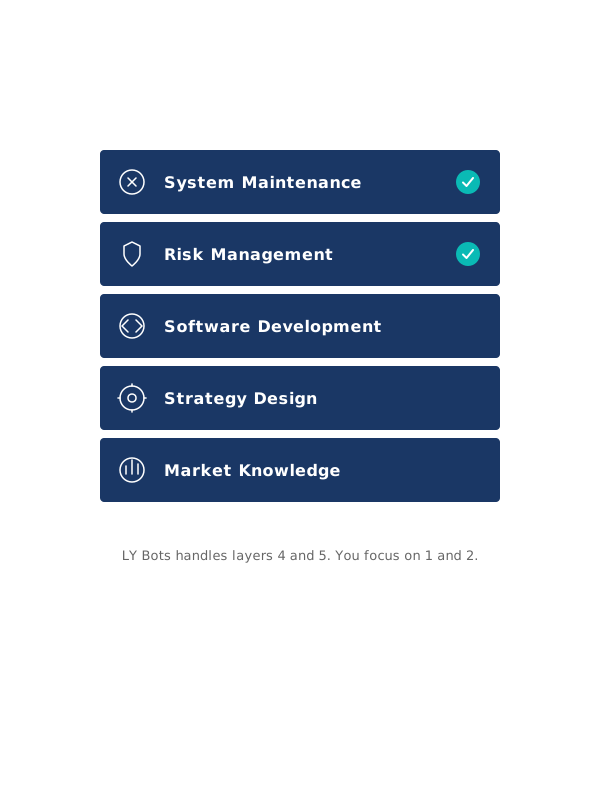
Gustavo was strong in one. Competent in maybe two. The rest? He learned the hard way.
A trading system isn't a script. It's software that must:
One bug in any of these layers and the system fails. Not "might fail" — fails.
Gustavo's professional strength is solving new problems and moving on. That's great for industrial science. It's terrible for automated trading.
Building a reliable EA means testing, refining, testing again, running in simulation, finding edge cases, fixing them, and repeating — for weeks or months on a single strategy. The work is unglamorous. Most solo builders get bored before they get reliable.
Processing data isn't the same as understanding what the data means. Gustavo could build a pipeline. He struggled to translate real-world market behaviour into rules that held up across different conditions.
Technical skills get you to a prototype. Market knowledge gets you to something that works.
Gustavo didn't fail because he wasn't smart enough. He failed because automated trading demands a combination of skills that almost nobody has alone. He needed:
LY Bots exist because Gustavo's experience is universal. Most traders who want automation don't need to build it. They need software that already:
The hardest part of trading isn't knowing what to do. It's doing the same thing, the same way, every session. That's what an EA provides — not a strategy you hope works, but execution that doesn't deviate.
Gustavo's lesson isn't "don't try." It's "know where your time is best spent." For most traders, that's not in building the software. It's in configuring it, testing it, and letting it do what it was designed to do.
