Markets move in cycles. Not randomly — but in patterns shaped by economic calendars, corporate schedules, and the simple fact that human behaviour changes with the time of year.
Understanding these seasonal rhythms doesn't give you a crystal ball. But it does give you something almost as valuable: context. Knowing when certain instruments typically perform — and when they typically don't — helps you align your strategy with the market's natural tempo rather than fighting against it.
Seasonality refers to recurring patterns that appear in financial markets at specific times. These aren't superstitions. They're observed tendencies, documented across decades of data:
A trader who understands these rhythms can make better decisions about when to be active and when to step aside.
Historically, markets often see increased activity in January as capital flows back in after December's tax-loss selling and holiday lull. Small-cap and index movements in particular can show this pattern.
The "sell in May and go away" adage exists for a reason. Northern hemisphere summer months typically see reduced institutional participation, lower volume, and range-bound conditions in many instruments.
Quarterly corporate reporting creates predictable volatility windows. Knowing when the companies that drive your chosen indices report can help you anticipate choppy conditions.
Beyond monthly and quarterly patterns, there's a more granular seasonality most traders overlook: session behaviour.
The same instrument behaves differently depending on which session is active:
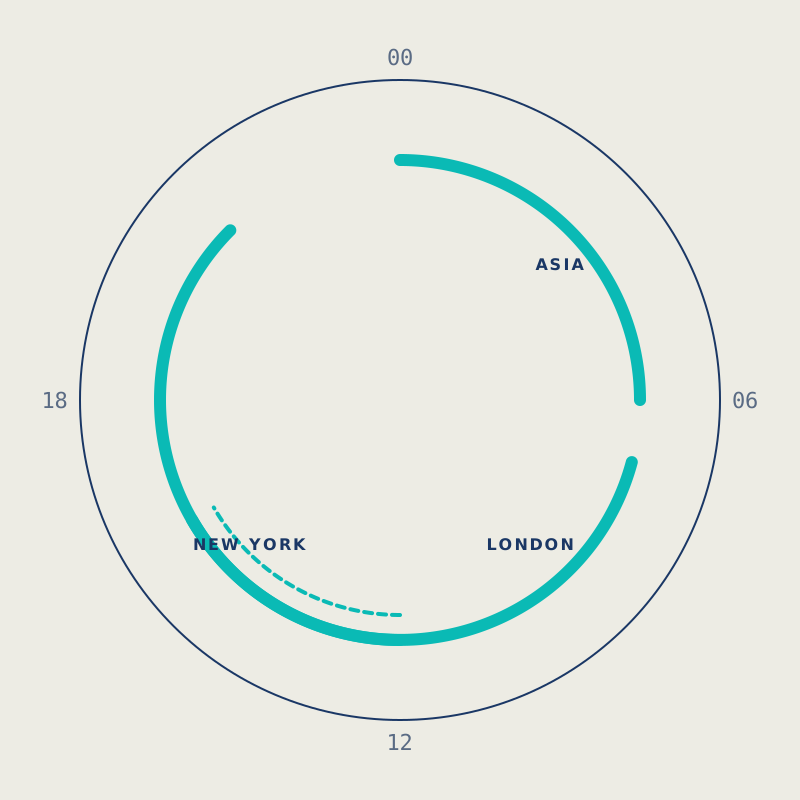
A Trading Bot (EA) configured for a specific session window respects this reality. It doesn't try to trade all 24 hours. It watches during the session you choose and waits outside of it.
Gold behaves differently from the Nikkei 225. HK50 has its own rhythm. Before you configure any parameters, understand what drives your chosen market and when.
If an instrument typically trends during London-New York overlap, that's where your EA should be active. If it ranges during Asian hours, a different strategy — or no strategy at all — may be appropriate.
Seasonality describes tendencies, not guarantees. Any given year can deviate from historical patterns. Use seasonal awareness as context, not as a standalone signal.
Knowing it's "typically a strong month" is not a reason to increase position size. Risk limits exist for the years that don't follow the script.
Markets have rhythm. They have seasons. They have sessions that matter and sessions that don't.
The trader who ignores this trades blind. The trader who respects it trades with context.
Discipline isn't just about following rules. It's about knowing when and where to apply them.
